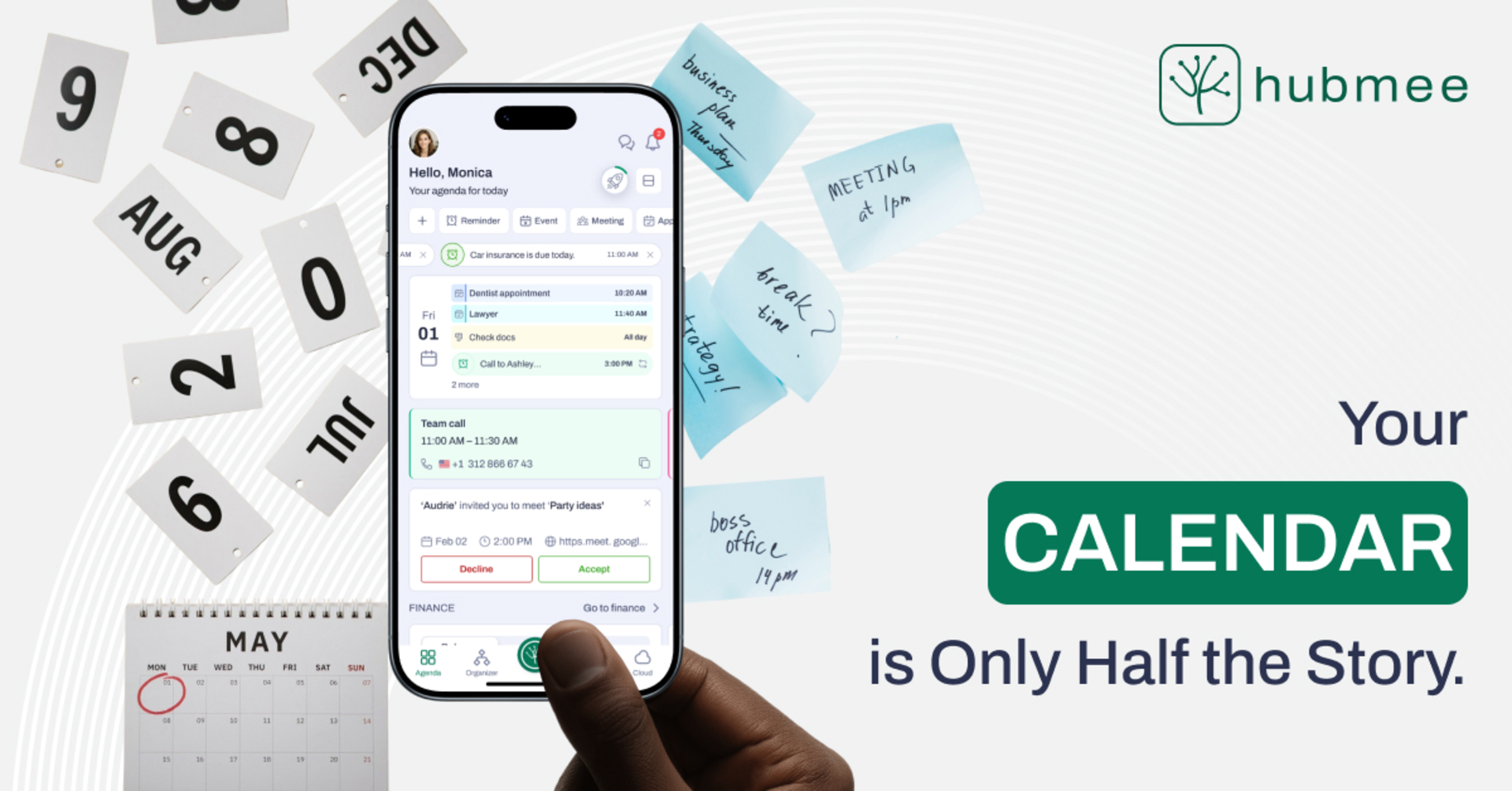
We’ve all been there. You stare at a perfectly color-coded Google Calendar, every hour accounted for, yet you still feel like you’re drowning. You’ve scheduled your gym session, your 10:00 AM meeting, and your dinner date. On paper, you are "organized." But then, the reality of "adulting" hits. You realize your car registration expired three days ago. You can’t remember where you saved the PDF of your lease agreement. Your dog is due for a rabies shot, but the paperwork is buried somewhere in a kitchen drawer. The truth is, we have been sold a lie: that time management is the same as life management. It isn’t. While a digital calendar is a great tool for tracking when you are busy, it is fundamentally incapable of managing what you need to know to keep your life running smoothly. In 2026, it's time to move beyond the grid. It’s time to talk about the Life OS. The biggest mistake we make in our digital lives is falling into the Calendar Trap. We treat our calendars like a catch-all for our existence. We set reminders like "Check car insurance" or "Find apartment keys," but when the notification pops up, the calendar offers no further help. It doesn't hold the policy number; it doesn't show the spare key location; it just tells you that you have a problem to solve. A calendar is a grid. It is designed to visualize the passage of time. However, your life is not a series of 30-minute blocks; it is a complex web of assets, documents, health records, and responsibilities. When you rely solely on a calendar, you are constantly experiencing "context switching." You see a reminder, then you have to leave the app, open your email to find a document, go to a notes app to find a password, and perhaps check a physical folder for a receipt. This isn't productivity—it's controlled chaos. The modern human is suffering from App Fatigue. Think about the "digital stack" you currently use to manage your household: Google Calendar for dates. Apple Notes for random lists. Dropbox or Google Drive for "important" (but hard to find) PDFs. Banking Apps for tracking bills. WhatsApp for family coordination. Each time you switch between these apps to find a piece of information, you lose focus. Studies show it can take up to 23 minutes to fully regain deep focus after a distraction. When your life is fragmented across five different platforms, you aren't just losing time; you are losing mental energy. We also have the "Glovebox Problem." How much of your vital information is still physical? Your car's manual, your pet’s vaccination records, your home’s appliance warranties - these are often living in a "junk drawer" or a glovebox. When you need them, you’re usually in a hurry or a high-stress situation, making the search for them even more draining. This is where the concept of a Life OS (Operating System) comes in. If your phone has an OS to make sure all its apps work together, why shouldn't your life have one too? Hubmee isn't just another productivity app; it’s the central nervous system for your daily existence. It bridges the gap between scheduling and storing. Instead of just telling you that you have a "Veterinary Appointment" at 2:00 PM, a Life OS links that appointment to your pet’s medical history, their insurance policy, and their dietary needs - all in one view. By shifting from a calendar-centric mindset to a hub-centric mindset, you stop chasing your schedule and start commanding your life. To understand why a Life OS is superior, let’s look at two specific areas where a traditional calendar fails, but Hubmee excels. Your Google Calendar might remind you to "Take car to shop." But it won’t tell you: Your current tire pressure specifications. The last time you changed your oil. The exact date your insurance expires. Your VIN or license plate number when you’re filling out paperwork at the DMV. In the Hubmee Garage, your vehicle is an asset, not just a line item on a Tuesday afternoon. You receive smart notifications based on your car's specific needs. It’s the difference between being reactive (fixing a broken car) and being proactive (maintaining a reliable machine). A calendar doesn't hold weight when it comes to documentation. If you're applying for a mortgage or renewing a lease, you need your "papers" in order. The Problem: Searching your "All Mail" folder for "Lease_Final_v2.pdf" while your landlord waits. The Hubmee Solution:The Vault (or Property/Personal Hubs) stores these documents in a structured, searchable way. Whether it’s your pet’s rabies certificate for a border crossing or your home’s HVAC warranty, it’s three taps away. The "hustle culture" of the last decade taught us to pack our calendars as tightly as possible. But in 2026, the real status symbol isn't being "busy" - it's being centered. True productivity isn't about squeezing another meeting into your 3:00 PM slot. It’s about knowing that if your water heater leaks, if your dog gets sick, or if you get pulled over by the police, you have every piece of information you need right in the palm of your hand. Consolidating your "Life Admin" into a single hub like Hubmee reduces the mental load that causes burnout. It clears the "RAM" of your brain so you can focus on what actually matters: your career, your family, and your peace of mind. Stop living in a grid. Start living in a Hub.The "Calendar Trap": A Grid is Not a Filing Cabinet
The Fragmented Life: The Hidden Cost of App Fatigue
The Hubmee Difference: Introducing the Life OS
Feature Deep Dive: The Power of Specialized Hubs
1. The Garage: Beyond the Commute
2. The Vault: Your Digital Safety Deposit Box
Comparing the Experience: Calendar vs. Life OS
Conclusion: The Ultimate Productivity Hack for 2026