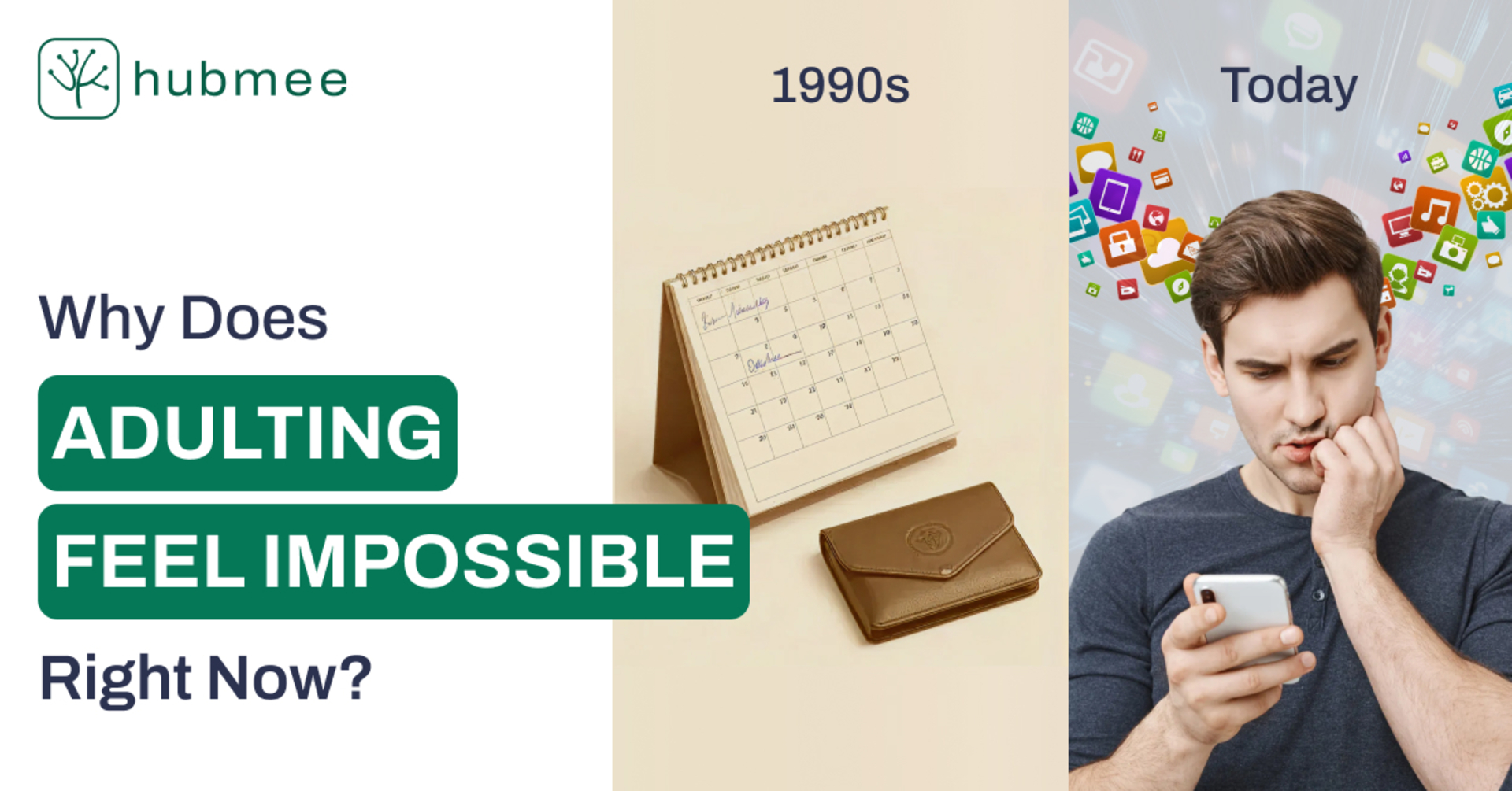
You know that feeling when you sit down to relax, and your brain immediately starts screaming at you? Did I pay the electric bill? When does my car insurance renew? Which streaming service charged me twice last month? When was my last dentist appointment? You're not losing it. You're experiencing what 67% of millennials and Gen Z adults report as their biggest struggle: the overwhelming weight of managing literally everything in modern life. According to recent APA research, about two-thirds of 18- to 34-year-olds say stress makes it hard for them to focus, and managing money ranks as their number one challenge - but it's not really about the money itself. It's about the mental load of tracking everything. Here's what really happens in your 20s and 30s: You're not just managing your life anymore. You're managing an entire system of documents, deadlines, subscriptions, renewals, appointments, and financial obligations that would have made your parents' heads spin. Your grandparents had a filing cabinet. Maybe a checkbook. A few bills that arrived by mail on predictable dates. You? You have: 17 subscription services (at least three you forgot about) Insurance policies that renew on different cycles Medical records scattered across four different patient portals Tax documents from three different gig economy platforms Student loan information buried in 47 unread emails A lease, utility accounts, and a phone contract all expiring at different times Important PDFs downloaded to your phone that vanished into the digital void Research shows adults spend over 1.5 hours per week on household management tasks alone - and that's just the documented time. It doesn't count the mental energy of remembering what needs to be managed, or the decision fatigue of figuring out how to manage it. I can already hear someone saying it: "Just make a spreadsheet." But here's the thing - you probably already tried that. You made a beautiful color-coded spreadsheet at 11 PM one Sunday night, feeling like you finally had your life together. And then... you forgot to update it. Or your phone died at the doctor's office when you needed that insurance info. Or you couldn't remember if you saved the updated version in Google Drive, Dropbox, or your laptop's Downloads folder. The real problem isn't that you're disorganized. The problem is that modern life requires enterprise-level document management skills that nobody ever taught you. As Psychology Today explains, this type of work is "invisible labor"- it happens in our devices through multitasking, or in our minds as we plan and decide. When you successfully pay a bill on time, nothing happens. There's no reward, no celebration. Just the absence of a late fee. This is why it feels so draining. You're working constantly to prevent bad things from happening, but you never get to feel the satisfaction of making good things happen. Previous generations didn't deal with this level of complexity because the infrastructure literally didn't exist. Your parents couldn't have 47 different accounts requiring passwords because the internet wasn't embedded in every service. Now? Everything generates documents: That workout class you took once? They have your credit card on file for auto-renewal Changed your address? Better update it with 23 different organizations Bought something online? Here's a receipt you'll need if it breaks in exactly 367 days Went to urgent care? That's three separate bills from three separate providers Each of these creates not just a document, but a decision point. File it or delete it? Set a reminder or trust you'll remember? Update it in your budget tracker or deal with it later? This is what psychologists call decision paralysis - when you have so many choices and so much information that your brain basically rage-quits. Let's be brutally honest: Nobody warns you that adulting would feel like drowning in browser tabs. A 28-year-old marketing coordinator told me: "I have sticky notes on my monitor, reminders in my phone, and a notebook by my bed. I still forgot to pay my water bill and didn't realize my gym membership increased by $15. I feel like I'm failing at basic adulting constantly." This isn't failure. This is a systemic problem masquerading as a personal one. When important documents are scattered across: Email accounts (personal, work, that old one you barely check) Random apps for each utility company Photos on your phone (screenshots of important things) Physical papers shoved in a drawer Cloud storage you're not sure you're still paying for ...Of course you feel overwhelmed. Your brain isn't designed to be a search engine for your entire life. The solution isn't to be better at juggling 47 different systems. The solution is to stop juggling. This is where proper document management transforms from "corporate boring stuff" into actual life support. When you can store all your important documents, track all your renewals, and manage all your deadlines in one secure place - instead of seventeen—something remarkable happens: Your brain gets bandwidth back. Modern life management platforms like Hubmee are designed specifically to solve this document chaos. Instead of: Searching through emails for that insurance card Wondering when your lease expires Missing subscription renewal deadlines Losing track of medical records Forgetting about warranty expirations You get: Secure document storage with actual organization Automatic reminders for renewals and deadlines Financial tracking that connects to your accounts A single place to manage property details, medical info, and important dates The mental freedom that comes from knowing where everything is It's not about being a more organized person. It's about having a system that works with how your brain actually functions, instead of against it. Here's what managing your life should look like: Store your important documents once, access them from anywhere Get notified before things expire (not after) Track subscriptions so you can actually cancel the ones bleeding you dry Keep medical records, insurance info, and legal documents in one secure place Share access with family when needed without forwarding 17 different emails The difference between struggling with adulting and feeling competent at it often isn't maturity, intelligence, or work ethic. It's having the right infrastructure. Your parents didn't need a sophisticated document management system because their adult lives were simpler. You do need one, because yours isn't. If adulting feels impossible right now, you're not broken. The system is broken. Modern adult life generates an unprecedented volume of documents, deadlines, and decisions. The human brain hasn't evolved to manage this cognitive load without tools. Pretending you should be able to "just remember everything" or "stay on top of it" with sticky notes and good intentions is setting yourself up for exactly the kind of stress that 67% of young adults are reporting. The solution isn't to try harder. It's to work smarter. Centralized document management isn't about becoming a perfectly organized person. It's about building a system that prevents chaos in the first place. It's about reducing the mental load so you can focus on actually living your life instead of just administering it. Because here's the truth: You're already doing the hard work of adulting. You're just doing it with the wrong tools. And that makes everything feel approximately 1000% more difficult than it needs to be. Ready to stop drowning in documents and actually get your time back? That's what proper life management looks like - and it's completely achievable once you stop trying to manually track everything in your head.The Document Crisis No One Talks About
Why "Just Use a Spreadsheet" Doesn't Work
The Information Overload Is Real
The Hidden Emotional Cost
What Actually Helps: Centralized Document Management
Breaking Free From Document Chaos
The Bottom Line