It always hits the same way.
You’re checking your card statement for one “real” purchase—groceries, gas, rent—and then you see it: another $9.99, $14.99, $5.99, $19.99 charge from something you swore you canceled. Or worse: something you don’t even recognize at first, because the charge name looks like a random corporation instead of the app you signed up for.
And that’s the part nobody talks about: it’s rarely one big obvious bill. It’s a thousand tiny cuts—quiet, recurring, easy-to-miss charges that turn into a monthly leak.
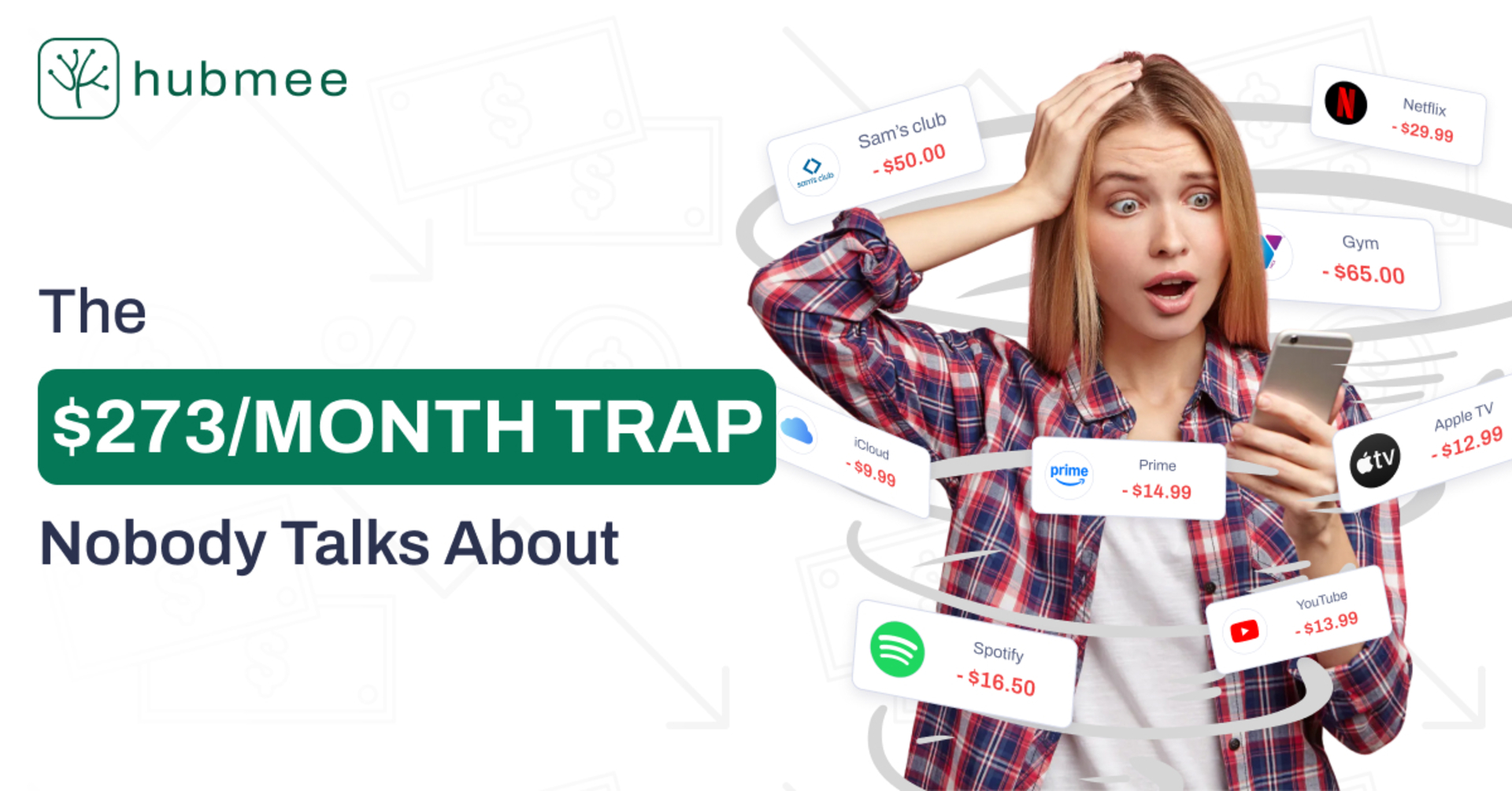
According to reporting on a West Monroe survey, the average consumer said they spend $273 per month on subscription services. Even more painful? Most people underestimate what they spend until they sit down and add it up. ZDNET
That “$273/month” number isn’t just a statistic. It’s a lifestyle tax—one that thrives on your exhaustion, your optimism, and your lack of time.
The Subscription Trap Isn’t About “Bad Money Habits”—It’s About Psychology
Subscriptions don’t usually get you because you’re irresponsible. They get you because you’re human.
Companies design subscription signups around momentum: “Start free trial” is one click. “Cancel” is a scavenger hunt.
Why it works:
First, there’s inertia: once a payment is set to autopilot, your brain marks it as “handled.” You don’t wake up every month and choose Netflix. It just… happens.
Second, there’s the default effect: the default option is continued payment, not cancellation. That means “doing nothing” costs you money.
Third, there’s the emotional trick: free trials feel harmless. You tell yourself, “I’ll definitely cancel before it renews.” You mean it. Then life happens.
And then there’s the most powerful force of all:
Decision fatigue.
The Real Cost: Subscription Fatigue and the Mental Load of “Just Keeping Track”
It’s not only the money. It’s the constant low-grade stress of remembering what you signed up for and where.
Harvard Business School Working Knowledge notes the average U.S. consumer spent $273 a month on 12 paid subscriptions—and that consumers are feeling overwhelmed by what some call “subscription fatigue.” Harvard Business School Working Knowledge
Twelve.
That’s not “a couple streaming services.” That’s a part-time job in admin work.
Because tracking subscriptions isn’t one task—it’s a pile of tasks:
You have to remember which email you used, what password you set, what platform you subscribed through (website? Apple? Google?), and whether canceling means:
- ending access immediately,
- ending at the billing cycle,
- or “pausing” (which is often just a polite word for “we’ll charge you later”).
This is why people don’t cancel.
Not because they don’t care—because they’re tired.
The Shame Spiral: “Why Am I Paying for Hulu AND Netflix AND Disney+?”
Let’s talk about the moment that hurts the most: realizing you’ve been paying for multiple streaming services for months… and barely watching any of them.
It’s not unusual to stack:
- Hulu “because one show”
- Netflix “because everyone has it”
- Disney+ “for the kids”
- Max “because you meant to watch that one series”
- Paramount+ “for the game”
- Peacock “because… honestly who knows”
Then you look back and realize you’ve been funding this little entertainment empire for six months while mostly scrolling TikTok.
The shame isn’t just financial. It’s emotional: “How did I let this happen?”
That shame is part of the trap. Because shame makes you avoid looking. Avoidance makes the charges continue.
Why Canceling Feels So Weirdly Hard (And Sometimes Is Hard)
Many companies don’t make cancellation impossible. They just make it annoying enough that you’ll postpone it.
You’ll see patterns like:
- “Cancel” hidden under Account → Billing → Plans → Manage → Other Options
- “Chat with us to cancel”
- “Call during business hours”
- “Confirm cancellation” screens that loop into upsells
- “Pause instead” buttons that are bright and big, while “Cancel” is gray and small
Regulators have noticed this. The Federal Trade Commission (FTC) announced a final “click-to-cancel” rule intended to require companies to make cancellation as easy as sign-up, and cited thousands of consumer complaints about recurring subscription practices. FTC
Even if rules change, the lived reality remains: canceling often requires more energy than you have at 9:47 p.m. on a Tuesday.
Credit Card Statement Anxiety: The Monthly “What Did I Miss?” Check
If you’ve ever opened your statement and felt your stomach drop—this is for you.
Because the anxiety isn’t only from seeing high totals. It’s from the uncertainty:
- “Is this charge legit?”
- “Did I already cancel that?”
- “What if I cancel the wrong thing and lose access to something I need?”
- “What if I call and it becomes a whole ordeal?”
That anxiety makes people avoid checking, which is exactly how the “forgot to cancel subscription” loop keeps repeating.
Cancellation Documentation: The Boring Step That Saves You
Here’s what experienced subscription-cutters learn fast:
If it’s not documented, it didn’t happen.
When you cancel:
- Take a screenshot of the cancellation confirmation page.
- Save the “Your subscription has been canceled” email.
- Note the date and the last day of access.
- If you had to chat/call, write down the representative’s name and the case number.
This isn’t paranoia—it’s protection.
Because when a “cancelled” service charges you again next month, you want proof without having to rely on memory. Memory is exactly what the subscription trap is designed to exploit.
How Hubmee Fits In: Less Tracking, More Control
If subscriptions are death-by-a-thousand-cuts, the fix isn’t willpower—it’s visibility.
The real win is being able to answer, anytime:
- What am I paying for?
- How much is it costing me monthly?
- Which subscriptions are duplicates?
- Which ones haven’t I used?
- What can I cancel this week—fast?
That’s where Hubmee helps: making subscriptions something you can see and manage instead of something that ambushes you once a month.
Not as a “budgeting lecture,” but as relief: fewer surprises, fewer forgotten renewals, fewer tiny charges quietly stacking into a number like $273.
The 15-Minute Escape Plan (Do This Today)
If you want a simple start—do this in one sitting:
- Open your last 2 months of card statements and mark every recurring charge.
- Circle anything you don’t recognize immediately.
- Cancel the easiest 1–3 subscriptions first (momentum matters).
- Document every cancellation.
- Set a recurring monthly reminder: “Subscription check.”
No guilt. No perfection. Just progress.
Because the goal isn’t to be the kind of person who never forgets.
The goal is to build a system that doesn’t punish you when you do.