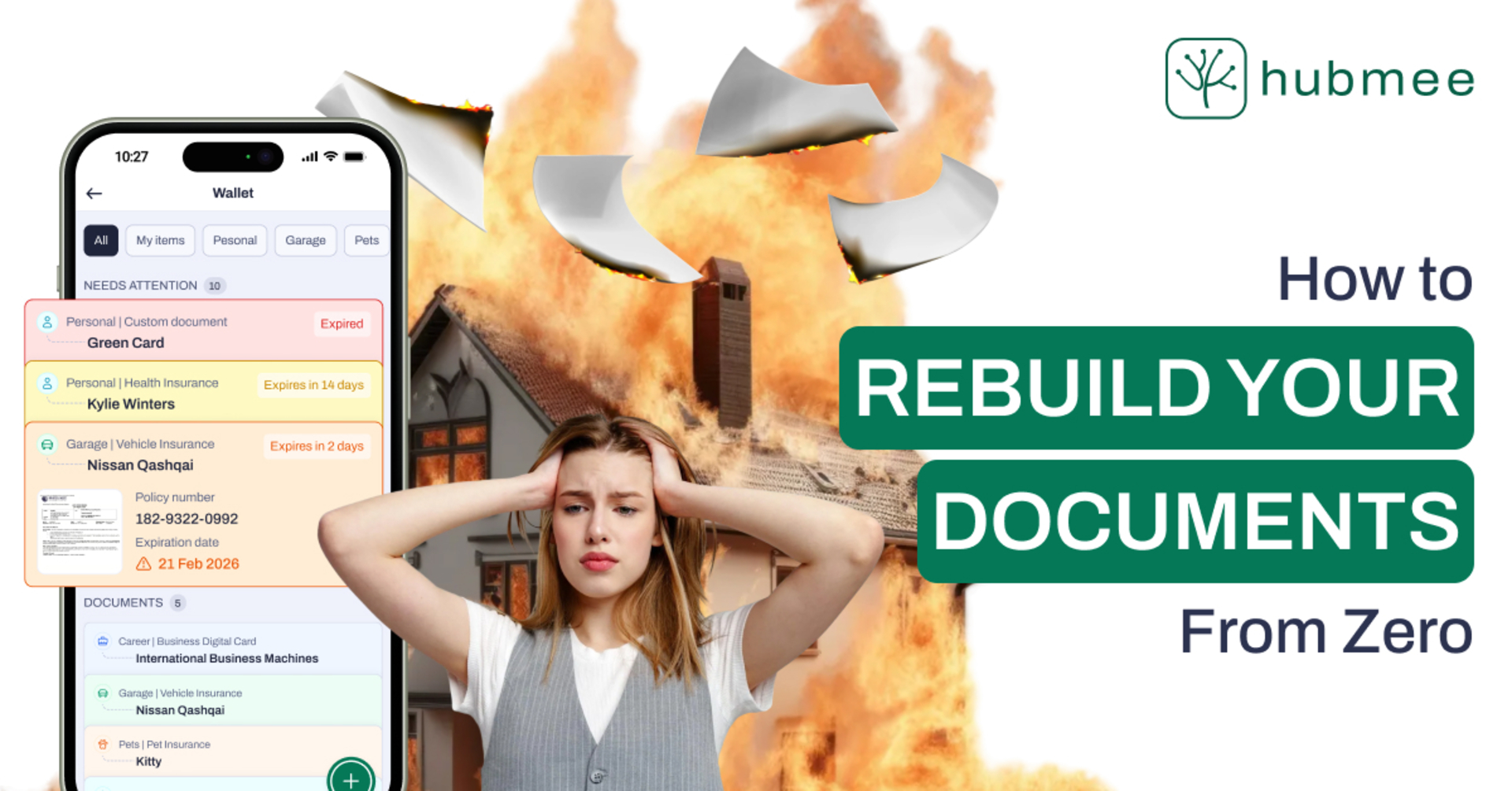
The smoke had cleared. The water had receded. And Sarah stood in what used to be her living room, realizing that 37 years of her life - every birth certificate, passport, tax return, insurance policy, and irreplaceable photo - was gone. If you're reading this with shaking hands because you just lost everything, take a breath. You're going to get through this. This guide will walk you through exactly what to do, in exactly the right order, to rebuild your document life from absolute zero. According to FEMA, over 500,000 Americans lose vital documents to disasters every year. From California wildfires to Florida hurricanes, from burst pipes to house fires, document loss happens more often than we want to believe. And unlike physical belongings that insurance can replace, your identity documents require a specific, often frustrating, rebuild process. One Reddit user shared their experience: "I lost a folder containing all of my important documents... birth certificate, SSN card, immunization records, diplomas. I don't even know where to start." The panic is real. The overwhelm is valid. But there's a roadmap out of this chaos. Here's the truth no one tells you: the order you replace documents matters desperately. Many documents require other documents as proof of identity. Get the sequence wrong, and you'll hit bureaucratic brick walls that waste weeks. Start here. Everything else depends on this. Your driver's license or state ID is your golden ticket to rebuilding everything else. Without it, you can't prove you're you. Immediate action steps: Go to your local DMV/DPS office in person (don't waste time with online forms—explain your situation) Bring anything you have: utility bills with your name, pay stubs, vehicle registration, even junk mail Explain you're a disaster victim - most states have expedited processes for emergency situations If your license was from another state, contact that DMV for a replacement Cost: $10-$40 depending on your state Pro tip from a Louisiana flood survivor: "I brought a printed news article about the flood in my area. The DMV clerk waived the usual documentation requirements when she saw I was in the affected zone." Now that you have photo ID, you can prove you exist. Next up: your Social Security card. How to replace it: Visit ssa.gov/myaccount and request a replacement online (if you had an account before the disaster) OR visit your local Social Security office with your new ID No fee for replacement (but you're limited to 3 replacements per year, 10 in a lifetime) Timeline: 10-14 business days by mail Critical note: If you're applying for FEMA assistance, they'll need this number. Don't wait on the physical card—use your number as soon as you have your temporary ID. This is your foundation document - needed for passports, marriage licenses, and countless other replacements. Where to get it: Contact the vital records office in the state where you were born Use VitalChek.com for expedited service ($50-$100) Standard processing through state health departments ($15-$30, but 4-8 weeks) What you'll need: Your driver's license information Parents' names (as they appear on the original certificate) Your exact date and place of birth Payment Timeline: 2-3 days for expedited, 4-8 weeks for standard If your passport was destroyed, you'll need to report it lost/stolen to prevent identity fraud, then apply for replacement. Process: Report lost passport: Call 1-877-487-2778 or submit Form DS-64 online Apply for replacement at a passport acceptance facility (post office, library, county clerk) You'll need: Your birth certificate (see why order matters?), driver's license, passport photos, $130 for book or $100 for card Timeline: 6-8 weeks standard, 2-3 weeks expedited (+$60) Why this matters: Even if you don't travel internationally, your passport serves as bulletproof federal ID for everything from job applications to opening bank accounts. Once you have your core identity documents, tackle your financial life: Homeowner's/Renter's Insurance: Contact your insurance company within 24-48 hours File a claim even if you don't have your policy number (they can look you up) Take photos/videos of ALL damage before cleanup Request "advance payment" for immediate living expenses Document what you lost: This is where disaster victims hit a wall. How do you prove what you owned when it's all ashes? Credit card statements show recent purchases Bank statements reveal payment patterns Email receipts still exist in your inbox (search for "receipt," "order confirmation") Photos on your phone or social media often show your belongings in the background Pro tip: Insurance adjusters expect incomplete documentation after total loss. They work with you - but you need to start the conversation immediately. Immediate steps: Visit your bank branch in person with your temporary ID Request replacement debit/credit cards (2-5 day expedited shipping) Get temporary checks if you need them Change all online passwords from a secure device Credit bureaus: Place a fraud alert on your credit reports (free, lasts 1 year). Call one bureau, and they'll notify the others: Equifax: 1-888-766-0008 Experian: 1-888-397-3742 TransUnion: 1-800-680-7289 This protects you if someone finds your documents in the disaster debris. Your prescriptions just became urgent. If you had standing medications, you can't wait weeks for medical record transfers. Immediate action: Call your pharmacy - they have your prescription history Contact your doctor's office - they can issue emergency refills If you're displaced, ask for transfers to a pharmacy near your temporary location Request copies of your medical records (you're legally entitled to them) For insurance: Your provider can reissue your insurance card within days. Call the number on their website or check your benefits portal online. If you're in a FEMA-declared disaster area, you qualify for assistance - even if you have insurance. How to apply (do this within 60 days): Online: DisasterAssistance.gov Phone: 1-800-621-3362 (multilingual support) Mobile app: Download "FEMA" app What FEMA provides: Temporary housing assistance Home repair grants Replacement of essential household items Medical/dental expenses Document replacement reimbursement (yes, they'll help cover costs) What you'll need: Your Social Security number, address of damaged property, insurance information, household income, description of losses. Losing documents feels different than losing furniture. It's not just paperwork - it's proof you existed, proof of your accomplishments, your identity itself. You might feel: Violated (even if it was a natural disaster, not theft) Overwhelmed by bureaucracy when you're already traumatized Angry at yourself for not having backups Hopeless about the mountain of tasks ahead This is normal. One fire survivor shared on Reddit: "I felt like I didn't exist anymore. I had no proof of my education, my marriage, my entire life." Give yourself grace. Rebuild one document at a time. Celebrate each small victory—that replacement ID is a huge win. Here's what Sarah learned after rebuilding her document life from scratch: Digital backups aren't paranoid - they're essential. This is where a comprehensive life management system like Hubmee becomes invaluable - not just after disaster strikes, but as your insurance policy against it. Hubmee's secure cloud storage means: ✅ Instant access from anywhere: House burned down? Your documents are accessible from your phone at your hotel, your parents' house, or the emergency shelter ✅ Automatic organization: No "I know I saved it somewhere" panic. Your insurance policy, birth certificates, and tax returns are categorized and instantly searchable ✅ Bank-grade encryption: More secure than that filing cabinet that just went up in smoke. Your sensitive documents are protected with the same security banks use ✅ Renewal reminders: Beyond disaster recovery, you'll never miss an insurance renewal, passport expiration, or warranty deadline again ✅ Family sharing: Your spouse, adult children, or trusted emergency contacts can access critical documents when you can't Let's be honest about what Sarah faced: 47 hours spent on hold with various government offices $847 in expedited processing fees (ouch) 6 weeks without proper ID for job applications Lost tax deductions from destroyed receipts (estimated $2,000+) Insurance claim delays from inability to prove ownership Priceless: Family photos, children's artwork, handwritten recipes—gone forever The investment in digital document management? Hubmee's premium plan is just $9.99/month—less than a single expedited birth certificate. Once you've rebuilt everything, immediately do this: Scan everything as you receive new documents Upload to secure cloud storage (not just your computer—that can burn too) Share access with one trusted family member Set reminders for renewal dates before documents expire Update annually (new insurance policies, address changes, etc.) Consider Hubmee's free plan to get started—unlimited document storage, automatic reminders, and access from any device. Upgrade to premium when you're ready for advanced features like financial tracking and family sharing. If you're in the thick of this disaster right now, print this article. Tape it somewhere visible. Use it as your checklist. Week 1: ID and Social Security card You've survived the disaster itself. You'll survive the paperwork too. And when you're through this? Protect future-you with digital backups. Because the one thing worse than losing everything once is losing everything twice.The Immediate Reality: You're Not Alone
The Document Recovery Priority System: Your Step-by-Step Lifeline
Priority Level 1: Government-Issued Photo ID (Days 1-3)
Timeline: Same-day temporary, 7-14 days for permanent cardPriority Level 2: Social Security Card (Days 4-7)
Priority Level 3: Birth Certificate (Days 7-14)
Priority Level 4: Passport (If You Had One) (Days 14-21)
The Financial Recovery: Insurance and Banking Documents
Insurance Claims (Immediate Priority)
Bank Accounts and Credit Cards (Days 3-7)
Medical Records: The Often-Forgotten Crisis
FEMA Assistance: Free Help for Disaster Victims
The Emotional Truth Nobody Talks About
The One Thing That Could Have Changed Everything
How Digital Document Storage Prevents This Nightmare
The Real Cost of Not Having Backups
Your Post-Recovery Document System: Never Again
The Bottom Line: You Will Rebuild This
Week 2: Birth certificate and financial accounts
Week 3: Medical records and insurance claims
Week 4: Passport and specialized documents
Week 5+: Digital backup system to prevent repeat nightmare