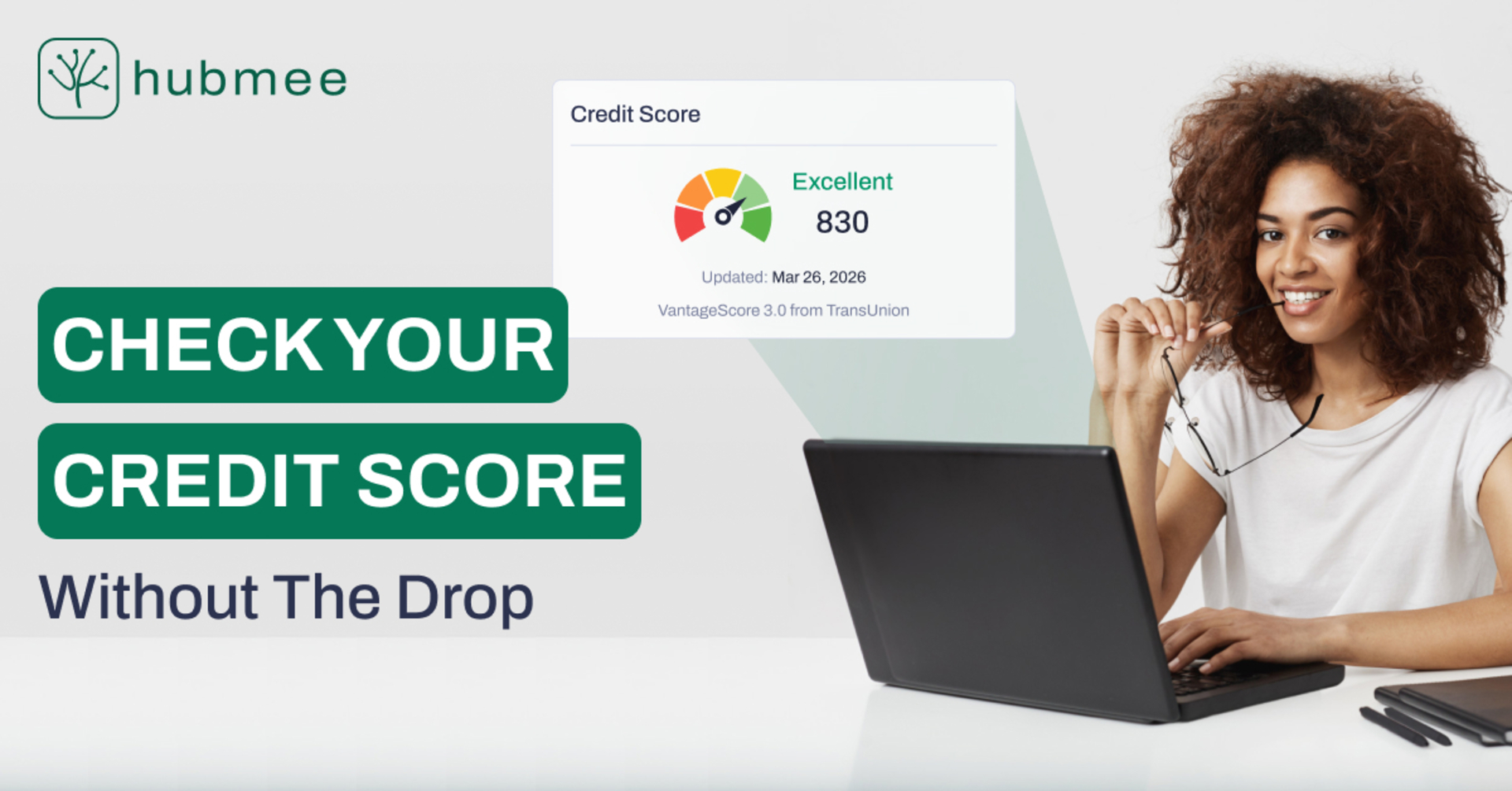
If you’ve ever avoided checking your credit because you were afraid it might make your score drop, you’re in very good company. A lot of people still believe that looking at their credit is somehow risky — like even opening the door might make the whole thing worse. But that’s one of the most persistent myths in personal finance. Here’s the truth: checking your own credit report or credit score does not lower your credit score. When you do it yourself, it’s generally considered a soft inquiry, and soft inquiries do not affect your score. The Consumer Financial Protection Bureau is very clear on this point. SourceSource So if checking your own credit doesn’t hurt you, what does? That’s where things get more interesting — and more useful. Because the real goal isn’t just to “check your score safely.” It’s to understand how to monitor your credit in a way that actually helps you make better decisions. One of the biggest mistakes people make is obsessing over the number and ignoring the file behind it. Your credit score is just a snapshot. Your credit report is the full story. Your report is where lenders see your open accounts, balances, payment history, inquiries, and any negative items like collections or charge-offs. Your score is built from that data. And according to the CFPB, you can have more than one legitimate credit score because different lenders use different scoring models, different bureaus, and different formulas for different products. Source That means two things: First, don’t panic if the score you see in one app is different from the score a lender sees. Second, if you want to be smart about credit, start by checking the report, not just the score. If you want the cleanest place to start, use AnnualCreditReport.com. The FTC says the three nationwide credit bureaus — Equifax, Experian, and TransUnion — permanently extended access to free weekly online credit reports through that site. That is far more generous than the old once-a-year mental model many people still have. Source That weekly access is underrated. Why? Because the most expensive credit problems usually don’t begin with a dramatic score crash. They begin with something small and easy to miss: a card balance reporting incorrectly an old account still showing as open a duplicate collection a late payment that shouldn’t be there an account that isn’t even yours The CFPB recommends checking your reports regularly because errors in your credit report can hurt both your credit history and your score. Source In other words: the real risk is not checking too often. The real risk is checking too late. Here’s one of the least obvious but most useful credit habits: learn your statement closing date. Experian explains that credit card issuers typically report account activity to the credit bureaus shortly after the end of a card’s billing cycle. In practice, that means your credit report often reflects your statement balance, not necessarily the balance you paid off a few days later. Source This matters a lot more than people realize. You might use your card heavily during the month, pay it down in full by the due date, and still see a temporary score dip because a high balance was reported first. So if you’re preparing for a mortgage, auto loan, apartment application, or any other important credit decision, don’t just pay on time. If possible, pay down your balance before the statement closes. That can help lower your reported utilization — and utilization is one of the biggest drivers of credit score changes. A lot of people hear “keep utilization low” and assume that the perfect number is zero. Not always. Experian notes that maintaining 0% utilization is not meaningfully better than staying in the single digits, and not using your cards at all can backfire. If an account sits inactive for too long, the lender may reduce your limit or even close the card, which can hurt your overall credit profile. Source The smarter approach is usually this: keep balances low use your cards occasionally pay on time avoid letting large balances report That’s more realistic, more sustainable, and often better for your score than trying to game the system into total zero. This is where most confusion starts. According to the CFPB, soft inquiries include things like checking your own credit report, certain prescreening activity, some employment screening, and reviews by existing creditors. These do not affect your credit score. Hard inquiries, on the other hand, usually happen when you apply for new credit and can affect your score. Source That distinction matters because people often say “I’m just seeing what I qualify for” without asking the important question: Will this be a soft inquiry or a hard inquiry? That’s a habit worth building. Before you click on a financing offer, apply for a store card, or go through a “pre-check” flow with a lender, ask exactly what kind of inquiry they’re going to run. That one question can save you from unnecessary hard pulls. Here’s another useful nuance people don’t hear enough: Not all hard inquiries are treated equally. The CFPB explains that when you shop for the same type of loan — such as a mortgage, auto loan, or student loan — multiple inquiries within a relatively short period are generally treated as a single inquiry by scoring models. Depending on the model, that window is often somewhere between 14 and 45 days. FICO also says newer versions of its scoring models can treat rate-shopping inquiries within a 45-day period as one inquiry, and inquiries under 30 days old for those loan types may be ignored for scoring. SourceSource That means the smarter move isn’t to avoid shopping around. It’s to compress your shopping into a tight window. So yes, compare lenders. Just don’t drag the process across two months if you can help it. If you’re not actively applying for new credit, consider freezing your credit reports. Equifax says security freezes are free, must be placed separately at each bureau, and do not affect your credit scores. Source This is one of those moves that sounds extreme until you realize how practical it is. A freeze can’t stop every kind of fraud. But it can make it much harder for someone to open a new account in your name. That matters because fraudulent new accounts can lead to hard inquiries, missed bills, collections, and a credit mess you didn’t create. If you don’t plan to apply for credit soon, a freeze is one of the cleanest ways to reduce downside risk. The FTC advises consumers to dispute inaccurate information with both the credit bureau and the business that supplied the information. It also notes that credit bureaus generally have 30 days to investigate disputes. Source That timeline matters. People often notice something wrong, assume it will sort itself out, and wait. But if you’re even thinking about applying for credit in the next few months, that delay can cost you. A wrong late payment, duplicate account, or stale balance is not just annoying. It can make borrowing more expensive. If you want the short version, here it is: Check your own credit regularly. Checking your own credit doesn’t hurt your score. Avoiding it can. And if you want to stay on top of all of this without turning your finances into a full-time job, that’s exactly where a tool like Hubmee becomes useful: one place to keep your financial life visible, organized, and easier to act on before a “small issue” becomes an expensive one.Your credit score is not the whole story
The safest way to check your credit is also the most useful
The part most people miss: timing matters
Low utilization is smart. Zero utilization is not necessarily better.
Know the difference between a soft pull and a hard pull
If you’re rate shopping, do it on purpose
One of the most underrated credit-protection moves: freeze your credit
If you spot an error, act faster than feels necessary
The smartest way to check your credit without hurting it
Use official sources.
Read the report, not just the score.
Track your statement dates.
Keep utilization low, not obsessively at zero.
Ask whether a lender is doing a soft or hard pull.
Rate shop in a short window.
Freeze your credit when you’re not applying.
Dispute errors quickly.